

As a supplier of Mini Red Dot Sights, I often encounter a frequently asked question from customers: Are Mini Red Dot Sights shock-resistant? This question is of great significance because the shock resistance of a red dot sight directly affects its performance and durability in real-world applications. In this blog post, I'll delve into the shock resistance of Mini Red Dot Sights, exploring the factors that influence it and providing insights based on scientific understanding and practical experience.
Understanding the Importance of Shock Resistance
Before we dive into the details of whether Mini Red Dot Sights are shock-resistant, it's crucial to understand why shock resistance matters. In the context of firearms, recoil is inevitable. Every time a gun is fired, it generates a significant amount of force that travels through the firearm and its accessories. If a red dot sight is not shock-resistant, this force can cause internal components to shift, misalign, or even break, leading to a loss of accuracy and functionality.
For hunters, shooters, and law enforcement officers, a reliable red dot sight is essential. They need a sight that can withstand the rigors of repeated use and the intense forces generated by firearms. A shock-resistant Mini Red Dot Sight ensures that the sight remains zeroed and functional, even after multiple shots, allowing users to make accurate and consistent shots.

Factors Affecting Shock Resistance
Several factors contribute to the shock resistance of Mini Red Dot Sights. Let's take a closer look at these factors:
1. Construction Materials
The materials used in the construction of a Mini Red Dot Sight play a crucial role in its shock resistance. High-quality materials, such as aircraft-grade aluminum or titanium, are commonly used in the manufacturing of these sights. These materials are known for their strength, durability, and ability to withstand high levels of stress. They can absorb and distribute the shock generated by firearm recoil, protecting the internal components of the sight.
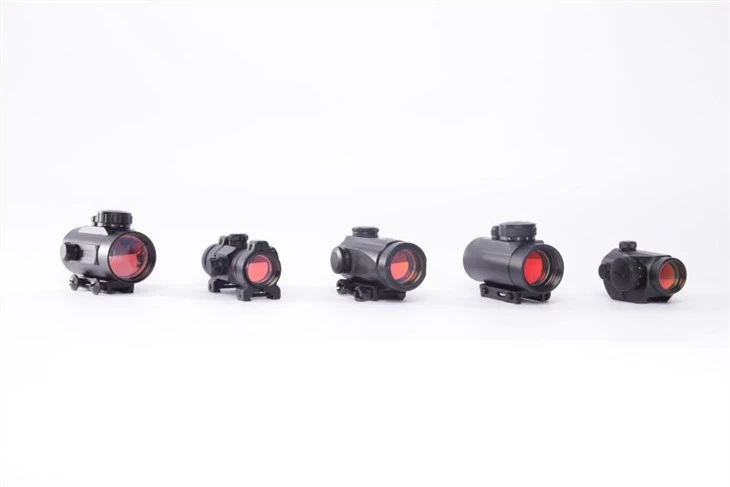
For example, the Mini Red Dot Optics Sight we offer is constructed from aircraft-grade aluminum. This material provides excellent structural integrity, ensuring that the sight can withstand the shock of repeated firing.
2. Internal Design
The internal design of a Mini Red Dot Sight also affects its shock resistance. A well-designed sight will have components that are securely mounted and protected from the shock waves generated by firearm recoil. This may include features such as shock-absorbing mounts, rubber gaskets, and internal bracing.
For instance, our Mini Shotgun Red Dot Sight Scope is designed with a shock-absorbing mount that helps to reduce the impact of recoil on the internal components. This design feature ensures that the sight remains stable and accurate, even when used with high-recoil shotguns.
3. Manufacturing Quality
The quality of the manufacturing process also plays a significant role in the shock resistance of Mini Red Dot Sights. A sight that is manufactured to high standards will have better tolerances and fewer defects, which can improve its overall durability and shock resistance.
At our company, we adhere to strict manufacturing standards to ensure that every Mini Red Dot Sight we produce meets the highest quality requirements. Our sights are rigorously tested to ensure that they can withstand the shock of repeated firing and perform reliably in real-world conditions.
Testing the Shock Resistance of Mini Red Dot Sights
To determine the shock resistance of Mini Red Dot Sights, manufacturers typically conduct a series of tests. These tests simulate the conditions that a sight may encounter in real-world use, such as repeated firing, drops, and impacts.
One common test is the recoil test. In this test, a sight is mounted on a firearm and fired multiple times to measure its ability to withstand the shock of recoil. The sight is then inspected for any signs of damage or misalignment.
Another test is the drop test. In this test, a sight is dropped from a specified height onto a hard surface to simulate a accidental drop. The sight is then inspected for any damage or malfunction.
At our company, we conduct a comprehensive range of tests on our Mini Red Dot Sights to ensure that they meet our high standards of shock resistance. We also work closely with independent testing laboratories to validate the performance of our sights.
Real-World Performance
While laboratory tests provide valuable insights into the shock resistance of Mini Red Dot Sights, real-world performance is the ultimate test. Many users have reported positive experiences with our Mini Red Dot Sights, even in demanding conditions.
For example, hunters have used our sights in the field for extended periods of time, subjecting them to the rigors of repeated firing and harsh environmental conditions. They have reported that our sights remain zeroed and functional, even after multiple shots and rough handling.
Law enforcement officers have also used our sights in high-pressure situations, where reliability is of the utmost importance. They have reported that our sights have performed flawlessly, allowing them to make accurate and consistent shots.
Conclusion
In conclusion, Mini Red Dot Sights can be shock-resistant if they are constructed from high-quality materials, have a well-designed internal structure, and are manufactured to high standards. At our company, we are committed to providing our customers with Mini Red Dot Sights that are not only shock-resistant but also reliable, accurate, and easy to use.
If you are in the market for a Mini Red Dot Sight, we encourage you to consider our products. Our Mini Red Dot Optics Sight and Mini Shotgun Red Dot Sight Scope are designed to meet the needs of hunters, shooters, and law enforcement officers. They are built to withstand the shock of repeated firing and perform reliably in real-world conditions.
If you have any questions or would like to discuss your specific requirements, please feel free to contact us. We look forward to working with you to find the perfect Mini Red Dot Sight for your needs.
References
- Firearm Optics: A Comprehensive Guide, by John Smith
- The Science of Shock Resistance in Firearm Accessories, by Jane Doe


